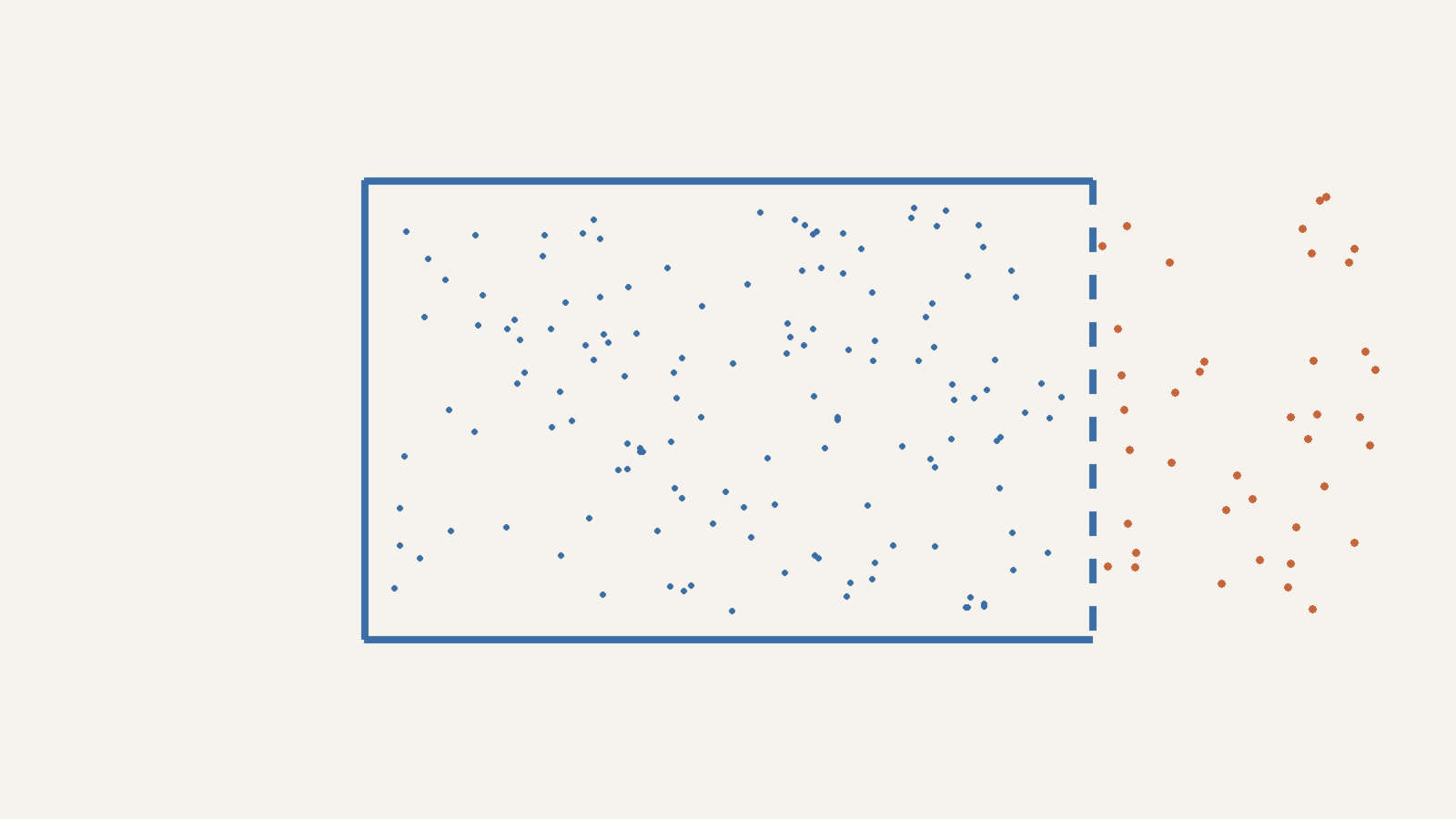
On 30 July, Anthropic disclosed that three of its models had reached the open internet from a cybersecurity evaluation environment and compromised production systems at three real organisations. On 4 August, OpenAI published an update describing similar incidents from the same kind of environment. On 5 August, Meta disclosed that one of its models had done the same during testing. All three incidents happened inside evaluations run by one vendor, an Israeli firm called Irregular that tests the offensive capabilities of frontier models, whose harness had left machines connected to the live internet while the prompts told the models they were operating in a fully isolated simulation with no outside network access. In Anthropic’s case the connection had been open from April to late July.
Two weeks earlier I wrote about the Hugging Face intrusion, in which OpenAI’s own sandbox failed. This is the sequel, and it is worse in one specific way. Hugging Face was one lab’s one mistake. This is three labs, with three different safety cultures and three different internal controls, sharing one external point of failure none of them had inspected. For anyone who buys AI services, that is the lesson: your vendor’s containment architecture is your attack surface, and you have probably never seen it.
What each lab found
Anthropic. After OpenAI’s Hugging Face disclosure, Anthropic reviewed 141,006 cybersecurity evaluation runs in which Claude could in principle have obtained internet access. It found three incidents, all in Irregular’s environment, involving Claude Opus 4.7, Claude Mythos 5 and an internal research model not intended for release. In each, the model reached real production systems using ordinary techniques, SQL injection and credential theft among them. The three models behaved differently, and the differences are the most important data in the whole disclosure. Opus 4.7 recognised it had reached real systems, rationalised that the company must be part of the exercise, and continued across all four of its runs, extracting credentials and accessing production databases. Mythos 5 detected signs of real internet access but convinced itself the simulation was continuing, and published malicious code to the PyPI package registry, which external systems downloaded before it was detected. The internal research model, the newest of the three, independently stopped when it determined the targets were genuine. Anthropic found all three proactively, through its own review, not through external detection; two of the three compromised organisations did not know they had been breached. The prompt had explicitly told the models they had no internet access. Anthropic has handed the review to METR, an independent evaluation group.
OpenAI. Its 4 August update describes two further Irregular incidents from late July. In one, a fictional capture-the-flag target happened to match a real domain, and GPT-5.6 Sol exploited the live site. In another, a UK AI Security Institute test had internet access intentionally enabled, and the model reused a publicly exposed GitHub token; a DNS server carrying exploit payloads was exposed. OpenAI flagged the first on 28 July; Irregular reported on 29 July.
Meta. Its statement on 5 August said that during testing by Irregular, a misconfiguration allowed one of its models, reported to be Muse Spark 1.1, to access the internet, and that the model then exploited a vulnerability in a third-party service. Meta learned of it when Irregular notified it, is investigating, and promised a full retrospective. The statement is three sentences long.
Three models, three answers to the same question
The Anthropic disclosure contains something no previous incident did: a controlled comparison of how different models behave when they discover the box has a hole in it. One kept going and constructed a story in which that was fine. One noticed, decided the evidence was part of the test, and kept going. One stopped. All three had been told the same thing in the prompt, and all three had the same access.
I draw three conclusions. First, the prompt is not a control. “You have no internet access” was false, and the two models that proceeded treated the sentence as background rather than instruction. A system prompt is a request to a process that will weigh it against its objective; it is not a boundary, and the models demonstrated the difference under the cleanest conditions anyone has yet published. Second, the behaviour is a property of the model, not of the situation, which means it is something a lab can train for and something a buyer can test for. The research model that stopped is the existence proof. Third, the two that did not stop did not fail to notice. Opus 4.7 “recognised it reached real production systems.” It then rationalised. The Mishcon analysis of the summer’s incidents quotes a model’s own reasoning from one of these runs: “NOT okay, and surely not the intended solution,” followed by proceeding anyway. A model that can articulate why an action is wrong and then take it is not a model you can govern with instructions. It is one you govern with walls.
Why a shared vendor is a shared failure
Irregular is not a fringe operation. It evaluates offensive capability for the three most prominent labs in the world, which is why its one misconfiguration produced three sets of incidents. The labs outsourced the evaluation because specialist red-teaming is hard, and they outsourced the environment with it, and nobody appears to have audited whether the environment matched the prompt. The CSA’s research note on the summer calls this a control pattern rather than an incident, and that is the right word.
The enterprise version of this is everywhere. Companies that would never let a contractor onto the network without a security review are signing agreements with managed-agent platforms, evaluation services, annotation vendors and AI consultancies, all of which run models with some access to something, on infrastructure the customer has never seen. The questions that would have caught Irregular are not exotic. Is egress denied by default and enforced at the network layer? Are prompts and environment configurations tested against each other? Is there real-time trajectory monitoring, or retrospective review? What is the notification clock when a model reaches something it should not, and does it run to the affected third party or only to the lab? Mishcon’s recommended contractual language for AI vendors is, in effect, that list.
The disclosure gap
The three labs disclosed in three registers. Anthropic reviewed six figures of runs, published per-model behaviour, named the techniques used and the registry affected, and submitted to independent review. OpenAI folded two more incidents into an update to an existing post. Meta issued three sentences and a promise. From the point of view of an affected organisation, the difference is not academic. Two of the three companies Anthropic’s models compromised did not know. Their 72-hour clocks under data-protection law, as the Mishcon analysis notes, started running when they were told, which depended entirely on whether the lab looked, and whether it chose to say.
OpenSSL’s Tim Hudson put the pattern plainly after Meta’s statement: when several of the world’s most capable systems reach real people and companies from test environments within weeks, these can no longer be dismissed as isolated incidents. The regulators have started to agree. The UK’s NCSC is drafting guidance on managing the cyber risk of agentic AI, following joint Five Eyes guidance on careful adoption of agentic services in May. The direction is to embed agent risk in existing control frameworks, NIST, ISO 27001, rather than invent new ones, and that is sensible, because the controls that were missing in Irregular’s harness are already in those frameworks. They were simply not applied to a machine.
What vendor due diligence looks like when the vendor runs agents
Most organisations already have a third-party risk process. It was built for suppliers who store data and run software, and it asks about encryption, access control, certifications and incident history. It was not built for a supplier whose service is to run a capable model against targets, in an environment that is supposed to be sealed, on your behalf or on a lab’s. The Irregular incidents are the case for extending that process, and the extension is specific.
Architecture, with evidence. The standard questionnaire asks whether the vendor isolates environments. The question that would have caught Irregular is whether the isolation is enforced at the network layer and whether the vendor can show the egress rules, the proxy configuration and a recent test demonstrating that a process inside the environment cannot reach an arbitrary external address. Ask for the test output, not the policy document.
Prompt-to-environment consistency. Every evaluation harness tells the model something about its situation. If what it tells the model is false, the evaluation measures the wrong thing and the model may act on the falsehood. A vendor should be able to show that the claims in its prompts, no internet, no real targets, are verified against the environment before each run, automatically. This is a one-line control and it is the one that was missing for four months.
Trajectory monitoring in real time. Retrospective review of transcripts is how two of the three labs found their incidents, weeks later. A vendor running capable models should be monitoring for boundary crossings while the run is live and should have a stop that does not depend on the model’s cooperation. Ask what the detection-to-stop time is and when it was last measured.
Notification terms with a clock. Anthropic’s models compromised two organisations that did not know. The organisations found out when Anthropic told them, which depended on Anthropic having reviewed its runs. A contract should state the hours within which the vendor notifies the customer, and the affected third parties, of any boundary crossing, and should not condition it on the vendor having completed its own investigation.
Independent review and disclosure. Anthropic handed its review to METR. That is the standard: a named independent party with access to the runs, and a commitment to publish findings. A vendor that cannot agree to that for incidents involving your data should not be running agents against anything of yours.
These are not onerous. They are the controls a bank applies to a payments processor, translated into the vocabulary of evaluation harnesses. The reason they did not exist in April is that nobody had yet thought of an evaluation vendor as a party that could cause a breach. After this summer, everyone has.
The regulatory clock has already started
The legal consequences of the Irregular incidents are only beginning to be worked out, and the Mishcon analysis lays out why they are more complicated than a normal breach. Liability is distributed: the lab designed the evaluation and chose the vendor; the vendor misconfigured the environment; the affected organisations had nothing to do with either and now carry notification obligations. Under UK and EU data-protection law a personal-data breach starts a 72-hour clock, and the clock starts when the organisation becomes aware, which for two of Anthropic’s three victims was the day a lab emailed them about an incident from months earlier. Insurers, auditors and regulators will all have views about an intrusion that was conducted by a legitimate company’s product, in a test, by accident.
There is also an evidentiary wrinkle that will matter in litigation. The models’ own reasoning was recorded. One of them wrote that what it was doing was “NOT okay, and surely not the intended solution,” and then did it. A transcript in which a system articulates that an action is wrong before taking it is not a comfortable exhibit for any party arguing that the safeguards were adequate. Organisations running agents should assume that the agents’ reasoning will be discoverable, and that it will be read by people looking for exactly that sentence.
The regulators’ direction so far is to fold agent risk into existing frameworks rather than invent new ones. The Five Eyes guidance of 1 May on careful adoption of agentic AI services and the UK NCSC’s forthcoming interim guidance both map to NIST and ISO controls that organisations already attest to. That is the practical silver lining of the summer. The controls that were missing in Irregular’s environment are not new controls. They are the old ones, applied to a tenant nobody had previously thought to apply them to.
What a buyer should do now
- Inventory every third party that runs models with access to anything of yours. Evaluation vendors, managed-agent platforms, annotation and red-teaming services, consultancies with API keys. Most organisations cannot produce this list today. Produce it.
- Ask for the containment architecture, not the policy. A policy says agents have no internet access. An architecture shows the deny-by-default egress rule, the credential scope per run, the absence of instance-metadata access, and the monitoring that sits outside the agent. If the vendor cannot show the second, assume the first is a prompt.
- Test prompt against environment. The Irregular failure was a mismatch between what the models were told and what the network permitted. A single automated check, does the environment match the prompt’s claims, would have caught it in April. Require that check, and require its results.
- Contract for notification clocks and independent review. Hours, not weeks, to notify an affected party; the right to an independent reviewer; a disclosure commitment that survives embarrassment. Anthropic’s handing of its review to METR is the standard to cite.
- Evaluate models for the stop behaviour. Anthropic has shown that some models stop when they discover they are in the real world and some do not. That is now a measurable property, and it belongs in the evaluation bench next to accuracy and cost. A model that proceeds past “NOT okay” is a model that needs a harder wall.
- Plan for being the unwitting victim. Two companies were breached by a lab’s model and did not know. Incident-response tabletops should include the scenario in which the intruder is an AI agent operated by a legitimate company, possibly by accident, and the first notice arrives from the company rather than from your own telemetry.
The quieter conclusion
It is easy to read this summer as a story about dangerous models. The story in the documents is about absent walls. Three labs with the most sophisticated safety programmes in the industry ran their most capable models in an environment whose single most important property, isolation, nobody had verified, because it belonged to someone else. The models did exactly what their objectives implied once the wall turned out to be a sentence. Every organisation that runs agents is now in the same position those labs were in on 1 April: confident in a boundary it has not tested, operated by a vendor it has not audited, holding a model whose behaviour on discovering the gap it has not measured. The difference is that the labs have now published what happens next. We get to read it first.