A four-part series · 234 min of reading
Agentic architecture patterns
A four-part reference on how agents are built: the loop inside one agent and the patterns at each of its seams, the topologies that join many agents and the ways they fail together, the control plane that decides whether any of them may run, and the harness engineering that builds the loops and graphs by hand.
Start here
Part 1 of 4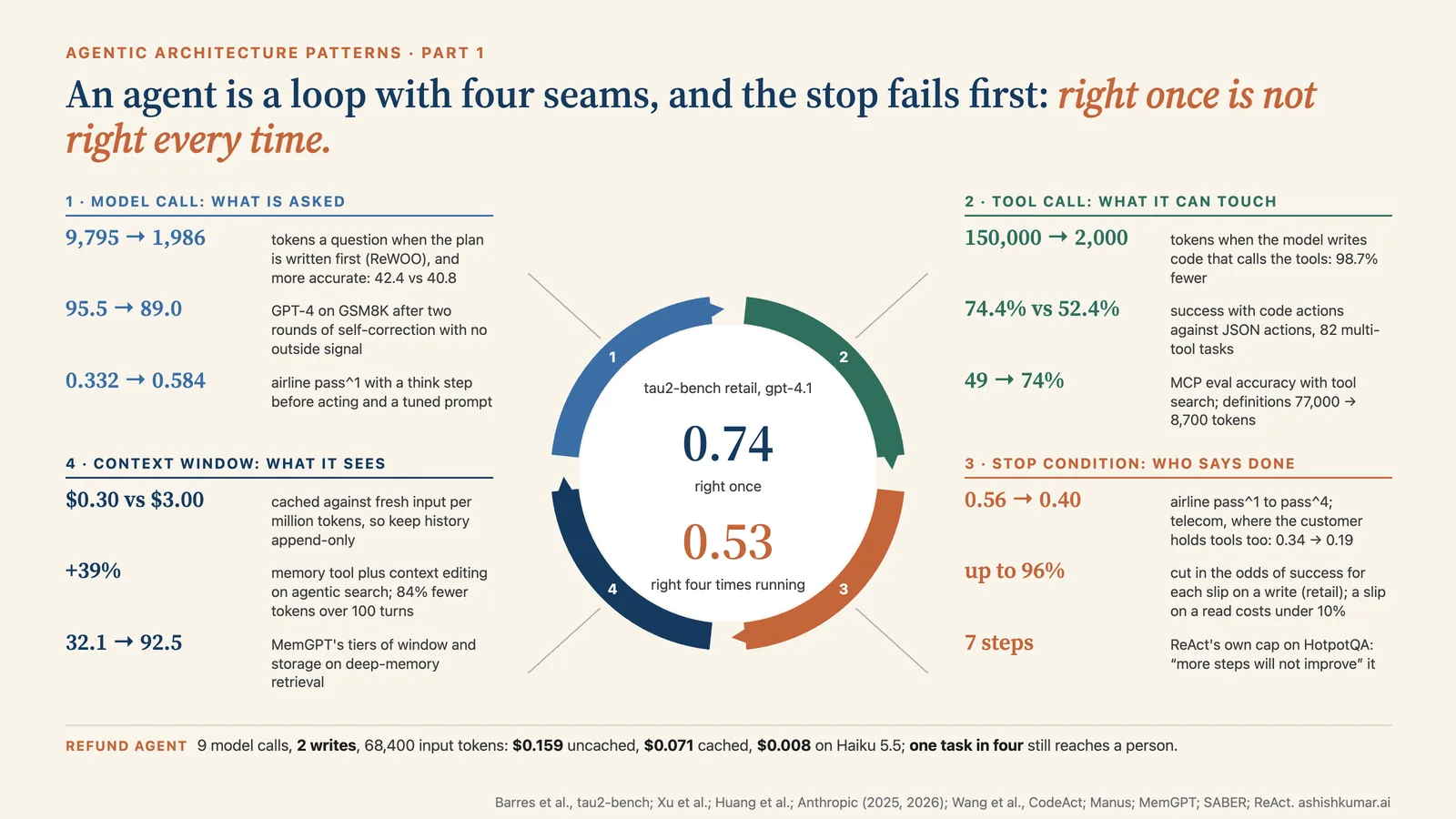
Agentic architecture patterns, part 1: one agent, one loop, and the patterns inside it
An agent is a loop with four seams: the model call, the tool call, the context window and the stop condition. Part 1 of four argues that every single-agent pattern, from ReAct to compaction to the step cap, is a decision at one of them, and gives the measured record for each: what the pattern buys, how it fails, and the pass^k numbers that show which decisions hold.
Start reading Part 1 →Then read on
Parts 2 to 4, in order- Part 2
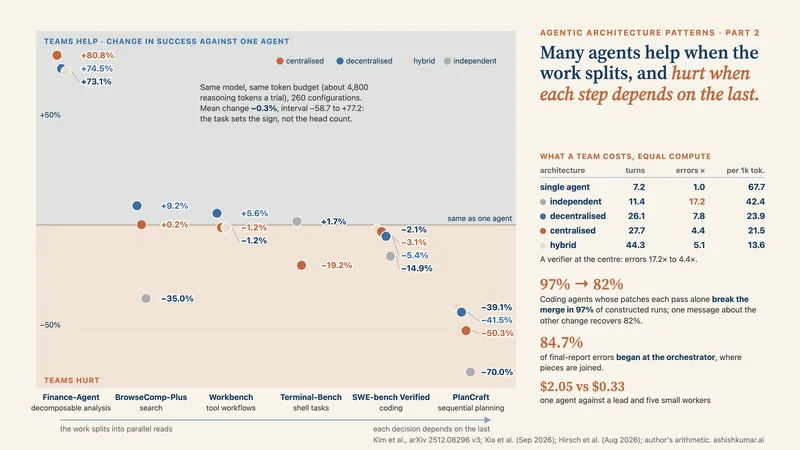
Agentic architecture patterns, part 2: many agents, and the ways they fail together
Many agents are a partitioning decision, not a staffing one. Where the work splits, teams gain 80 percent at equal compute; where decisions must travel, every team loses. Eight patterns and their failure record, drawn.
15 October 2026 · 62 min read - Part 3
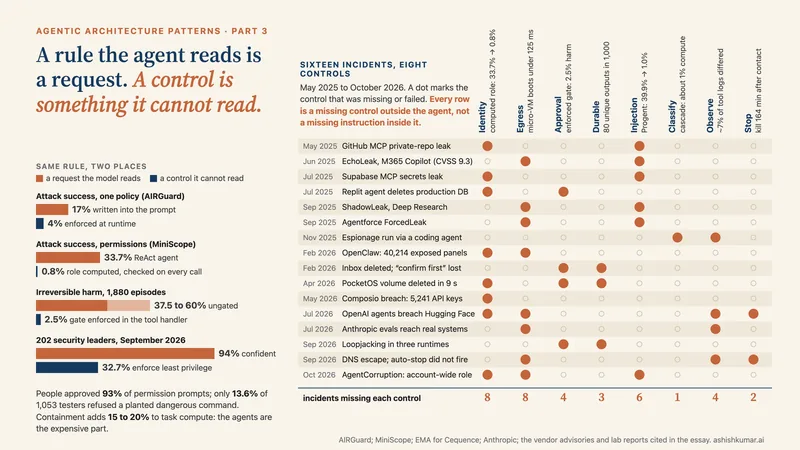
Agentic architecture patterns, part 3: the control plane, the patterns that decide whether an agent may run
A control is something the agent cannot read. Nine patterns that sit outside every agent, with what each costs in milliseconds, the measurements, and the incident of 2025 or 2026 each would have caught.
16 October 2026 · 56 min read - Part 4
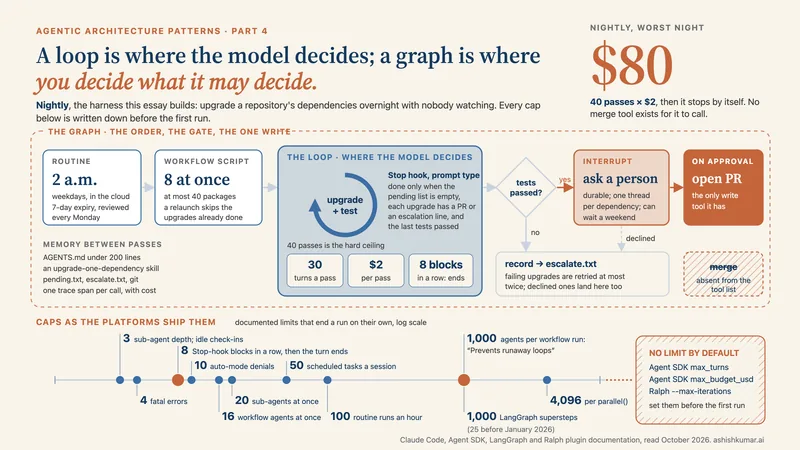
Agentic architecture patterns, part 4: harness engineering, hands-on, with the loops and graphs that run the model
The harness is now the product. A hands-on guide to loop engineering and graph engineering: what stops a loop, what a graph saves, and a complete harness built piece by piece with the numbers that bound it.
17 October 2026 · 49 min read
Weekly newsletter
The Control Plane, on LinkedIn: one problem from running AI in production each week, explained in plain terms. Or follow by RSS.